
 Is Your Dog on Santa's Naughty or Nice List?
 Light Up Dog Collar Guide: Safer Walks After Dark
 Dog Halloween Costumes Made Easy: Personalised Dog Collars and Bandanas
 Why a Personalised Dog Collar Makes the Perfect Gift
 Signs of Arthritis in Dogs: What Every Owner Should Know When the Temperature Dr
You know that moment. Your dog pushes themselves up from their bed, takes a few careful steps, then pauses for a second while their body adjusts. It is easy to chalk it up to age, but if you are noticing it more as the mornings get colder, it is worth paying closer attention.
Cold weather and arthritis in dogs are closely connected, and for many dogs the drop in temperature can turn a manageable condition into a noticeably more difficult one. Knowing the signs of arthritis in dogs to watch for, and understanding what is happening in their joints when the weather turns, puts you in a much better position to help.
What is arthritis in dogs?
Arthritis, more specifically osteoarthritis, is a degenerative joint condition in which the cartilage cushioning your dog's joints gradually wears down. In a healthy joint, cartilage allows smooth, low-friction movement. When it deteriorates, bones begin to rub against each other, causing inflammation, stiffness and discomfort that tends to worsen over time.
It is most common in older dogs and senior dogs, but arthritis may also develop in younger dogs following an injury, or in breeds with a genetic predisposition to joint problems. While there is no cure, the condition can be managed very effectively with the right care, and many dogs with arthritis continue to live comfortably for years.
Why cold weather makes arthritis worse
Many dog owners notice their pets slowing down or appearing stiffer as the temperature drops, and there are a few good reasons why colder weather can affect arthritis in dogs.
The synovial fluid that lubricates your dog's joints becomes thicker in cold temperatures, which makes movement less fluid and more effortful. Drops in barometric pressure, which are common during cold or damp weather, can cause the tissues around inflamed joints to expand slightly, intensifying discomfort. Dogs also tend to move less in colder months, and reduced activity weakens the muscles that support their joints, placing more strain on already-sensitive areas.
Cold weather does not affect every arthritic dog equally, so rather than assuming the colder months will always make things worse, pay attention to your individual dog's patterns and respond to what you actually observe.
Signs of arthritis in dogs to watch for
Dogs are good at masking pain, which means the signs of arthritis can build gradually before they become obvious. The key is noticing the subtle shifts in how your dog moves and behaves, particularly after rest or first thing in the morning.
Common arthritis symptoms to look out for include:
-
Stiffness when standing up, especially after sleeping or resting for a while
-
Reluctance to go on walks, climb stairs, or jump into the car
-
Limping or favouring one leg, particularly after exercise
-
A general slowing down on walks that used to feel comfortable
-
Sensitivity when touched near certain joints
-
Licking or chewing at a specific area of the body
-
Changes in temperament, such as becoming irritable, withdrawn or less sociable
-
Toileting accidents indoors if getting outside has become painful
If you notice that your dog's symptoms seem worse in cold or damp conditions, that is a meaningful sign worth raising with your vet. Do not assume your dog is simply getting older without ruling out arthritis first.
How to help a dog with arthritis at home
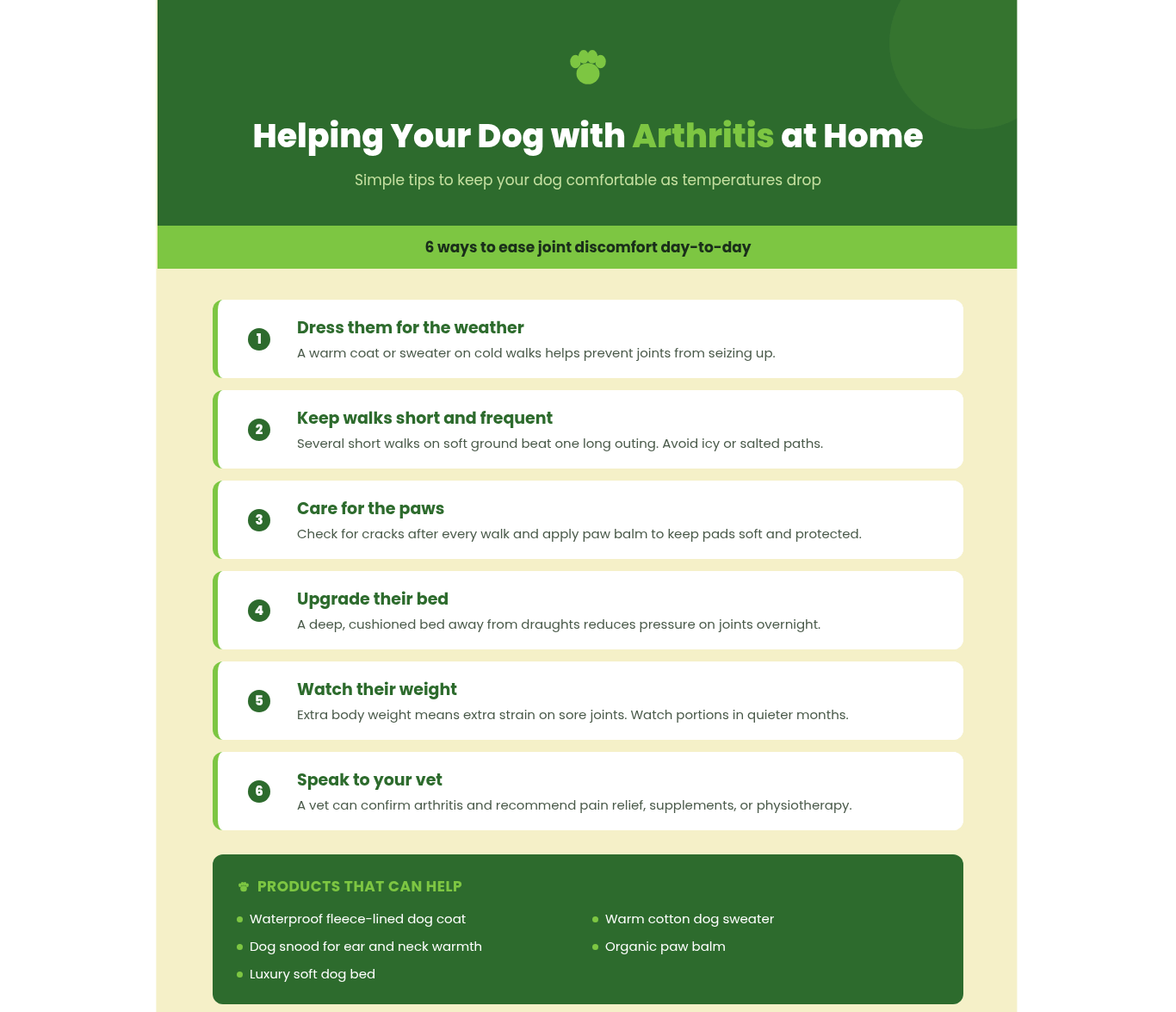
There is a great deal you can do to manage arthritis in dogs during cold weather, and most of it comes down to small, consistent changes to your dog's daily routine. Together, these adjustments can make a real difference to your dog's comfort and joint health through the colder months.
Keep them warm on walks
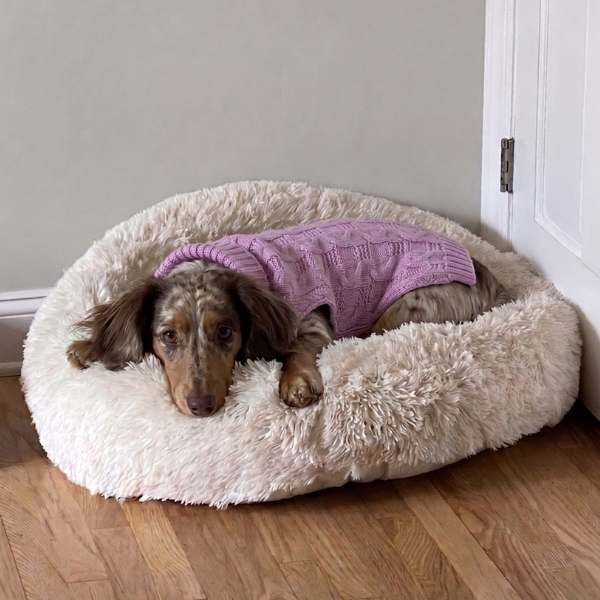
Cold air and wet conditions can intensify joint stiffness quickly, so making sure your dog is properly warm during exercise helps prevent their muscles and joints from seizing up. A warm cotton sweater works well on milder days, while a reflective waterproof dog coat with a warm fleece lining is the more practical choice for genuinely cold or wet conditions. Both help retain body heat throughout the walk, which keeps the joints moving more freely.
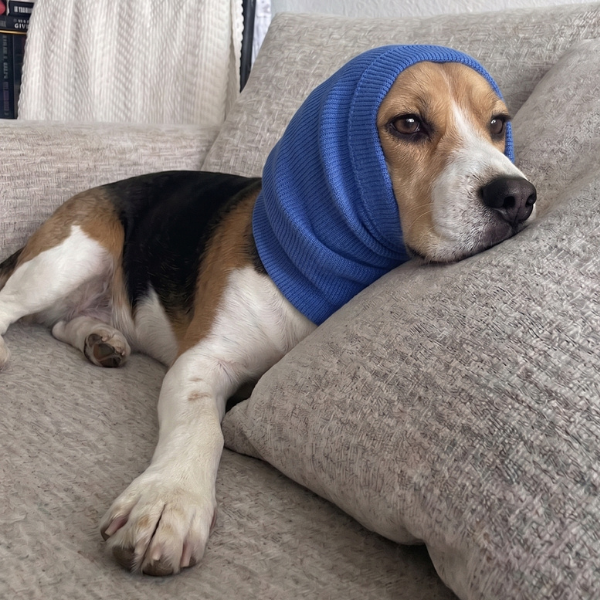
Older dogs and those with shorter coats lose warmth quickly, particularly around the ears and neck. A dog snood used alongside their coat provides extra warmth in exactly those areas, which can make chilly weather significantly more comfortable for dogs that feel the cold.
Adjust the walks, not the habit
Stopping walks altogether is not the answer. Consistent, gentle movement is one of the most effective ways to help your dog's arthritis, as it keeps the supporting muscles strong and the joints mobile. What needs to change is the format, not the commitment.
Short, frequent walks on soft ground are far better for dogs with arthritis than occasional longer outings. Grass and softer surfaces are more forgiving on sore joints than hard pavements. Avoid routes with steep inclines or uneven ground, and try to steer clear of paths treated with grit or salt, which can make each step more uncomfortable.
Look after the paws
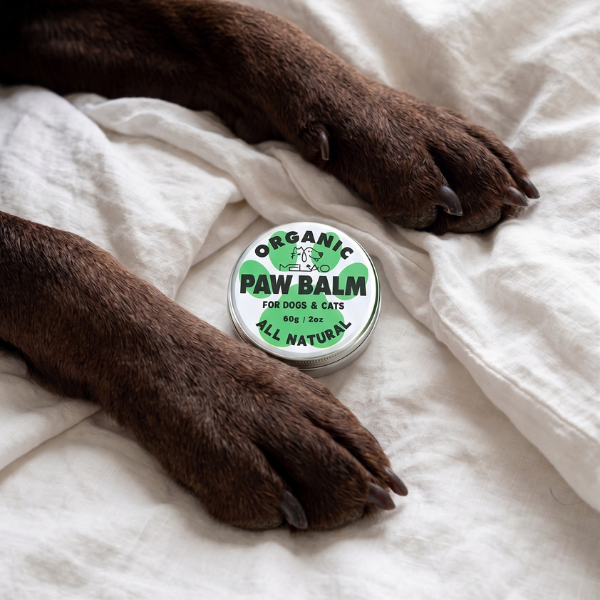
Cold, hard ground puts real pressure on an arthritic dog that is already managing joint pain, and paw care is something many owners overlook entirely. After walks in cold or wet conditions, check your dog's paws for any cracking or soreness. Applying an organic paw balm after each walk keeps the pads soft and protected, which in turn makes movement a little more comfortable on the next outing.
Give them somewhere properly comfortable to rest
Where your dog sleeps has a direct impact on how stiff they feel when they get up. A thin bed on cold floors is one of the most common contributors to morning stiffness in arthritic dogs. A luxury soft dog bed with deep, cushioned support helps distribute your dog's weight evenly and reduces pressure on sore joints through the night. Position it away from cold floors and draughts, and place a non-slip mat underneath if your flooring is smooth, both for insulation and to help your dog get up safely.
Weight management through the colder months
Weight management is one of the most effective and often underestimated ways to reduce pain in dogs with arthritis. Every extra bit of body weight places additional strain on the joints, and dogs are typically less active during colder months, making it easier for weight to creep up over winter.
Keep an eye on portion sizes through the winter months and be mindful of extra treats during quieter exercise periods. To help prevent winter weight gain, you may need to reduce food intake slightly if your dog's activity levels have dropped. If you are unsure whether your dog is carrying too much weight, your vet can assess their body condition and put together a sensible plan.
When to speak to your vet
If you suspect your dog has arthritis, a vet visit is the right first step. A vet can carry out a physical examination, assess your dog's range of movement, and recommend X-rays if needed to confirm the diagnosis and rule out other conditions. In more advanced cases, dogs with end-stage arthritis may show significantly reduced mobility and more persistent signs of pain, which makes veterinary support even more important.
Treatment options include prescription pain relief and anti-inflammatory medication, joint supplements, physiotherapy, and hydrotherapy. A veterinarian can help you build a treatment plan that works for your dog's specific condition and stage. Combined with the home care steps above, the right plan can significantly improve your dog's quality of life.
Contact your vet promptly if symptoms worsen suddenly, if your dog appears to be in significant pain, or if you notice any new swelling or heat around a joint.
Your dog cannot tell you when they are struggling, so it falls to you to notice the signs. With a little extra care through the colder months, most arthritic dogs can stay comfortable, active and happy. Small changes at home genuinely make a big difference to how your dog moves, rests, and feels every day.
Looking for comfortable, practical kit to help keep your dog warm and supported this season? Browse our full range and find everything your dog needs to get through the colder months in comfort.